 Expert eBooks Courses | Online-eBook-Download.com Latest digital books and courses, Tips & Tricks, How-to guides, free ebooks, software discounts, coupons & much MORE… Instant Download

Turn on the faucet. Nothing comes out. No warning. No backup. No timeline for when it returns. Desalination plants are being targeted. Water systems are fragile. And the question is no longer “if” disruptions will happen – it’s “what’s your backup plan?”
Wars, cyberattacks, aging infrastructure, and drought are quietly placing the global water supply under unprecedented pressure – and the events unfolding in the Middle East right now are the loudest warning shot yet.
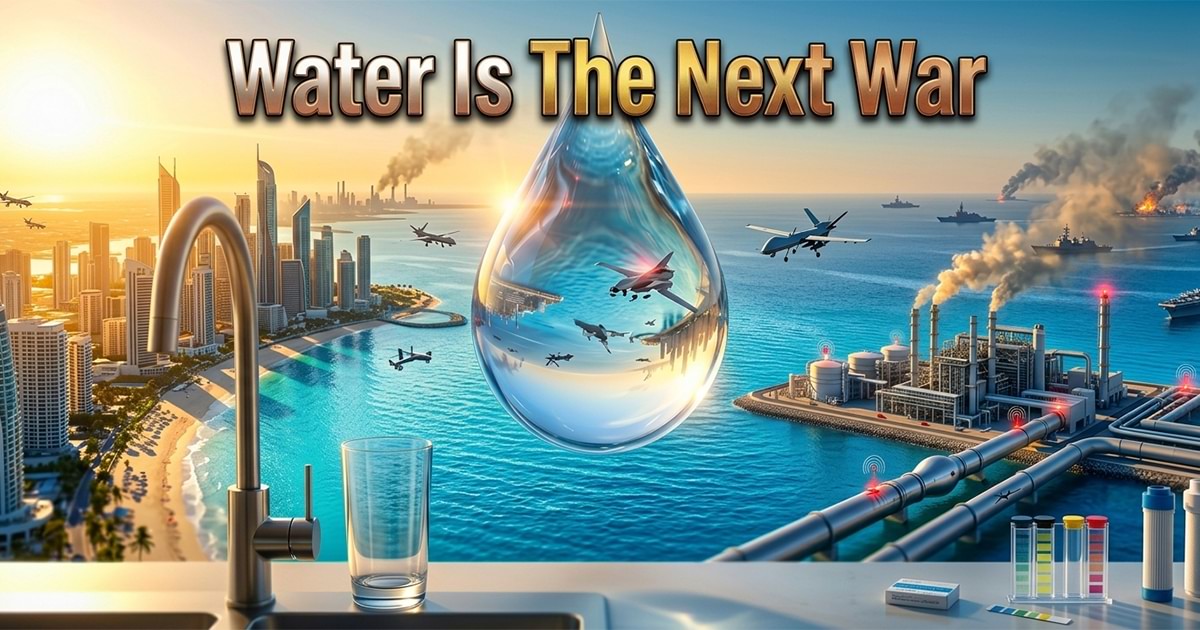
How the Iran-US-Israel War Is Quietly Turning Water Into a Weapon
Most people watching the headlines about the Iran war are focused on oil. Tankers. Sanctions. Fuel prices.
But behind the scenes, something far more dangerous is unfolding – the targeting of water infrastructure.
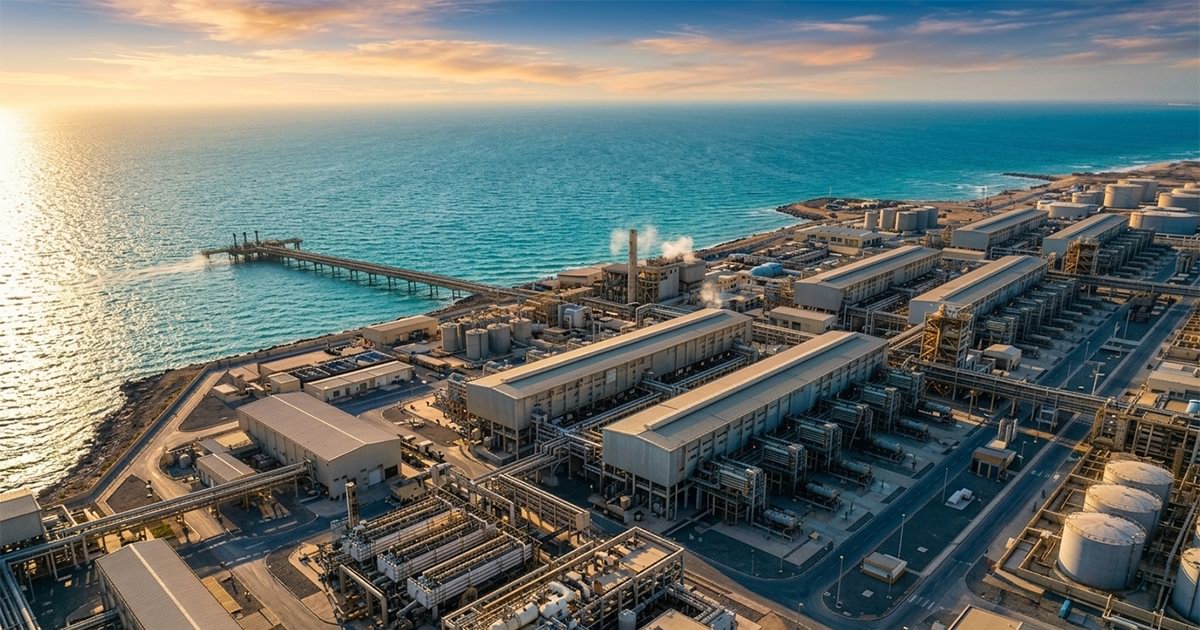
Across the Persian Gulf, fresh water isn’t produced the way most people imagine. Rivers are scarce. Rainfall is limited. In many countries, the majority of drinking water comes from desalination plants – massive facilities that remove salt from seawater to produce the fresh water that sustains cities, hotels, industry, and agriculture across one of the world’s driest regions.
Without them, major Gulf cities could not sustain their current populations.
And now, as the conflict between Iran, the United States, and Israel escalates, these facilities have been pulled directly into the battlefield.
»» Discover the DIY Water Generator Thousands Are Building ««
The First Warning Sign: Attacks on Desalination Infrastructure
The war began on February 28, 2026, with US and Israeli strikes on Iran. Within days, the conflict had reached water infrastructure on both sides.
On March 2, Iranian strikes near Dubai’s Jebel Ali port landed just 12 miles from one of the world’s largest desalination plants – the facility that produces much of the city’s drinking water. Damage was also reported at Kuwait’s Doha West desalination plant, appearing to result from nearby port attacks or intercepted drone debris.
Then, Iranian Foreign Minister Abbas Araghchi announced that a US airstrike had damaged a desalination plant on Qeshm Island in the Strait of Hormuz – cutting water supplies to 30 villages. He warned: “The US set this precedent, not Iran.” The US denied involvement.
On Sunday, March 9, Bahrain – home to the US Navy’s Fifth Fleet – accused Iran of indiscriminately attacking civilian targets, including one of its desalination plants. The island nation, already among the most water-dependent countries on earth, had been repeatedly targeted by Iranian drones and missiles.
Both sides crossed a line that experts had long warned about. And critically, experts noted there was “little evidence of Iran intentionally targeting water treatment sites” in the early days – meaning much of the damage was collateral. The deliberate phase, analysts warned, could still be coming.
“If attacks on desalination plants are the beginning of a military policy and not just mistakes or collateral damage, this is both illegal – a war crime – and a very concerning development, as Gulf countries have only a few weeks of water storage,” said Laurent Lambert, associate professor of public policy at the Doha Institute for Graduate Studies.
Why the Persian Gulf Is So Vulnerable
To understand why experts are alarmed, you need to understand one critical fact about this region: it essentially manufactured its own water supply.
“Everyone thinks of Saudi Arabia and their neighbors as petrostates. But I call them saltwater kingdoms. They’re manmade fossil-fueled water superpowers,” said Michael Christopher Low, director of the Middle East Center at the University of Utah. “It’s both a monumental achievement of the 20th century and a certain kind of vulnerability.”
As Associated Press reported in March 2026, analysts warn that water – not oil – may be the resource most at risk in the entire conflict.
from desalination
water from Gulf
UAE normal conditions
Hundreds of desalination plants sit along the Persian Gulf coast – within range of Iranian missiles and drones. Unlike oil facilities, desalination plants are extremely difficult to replace quickly. They are also physically integrated with power stations as co-generation facilities, meaning attacks on electrical infrastructure can simultaneously knock out water production.
As David Michel, senior fellow for water security at the Center for Strategic and International Studies, explained: “It’s an asymmetrical tactic. Iran doesn’t have the same capacity to strike back at the United States and Israel.” Targeting water infrastructure imposes massive costs on Gulf civilian populations – with far less military risk than a direct confrontation.
If major plants were knocked offline, the consequences would be immediate and severe. Cities could lose drinking water within days. Hospitals would struggle to operate. Sanitation systems would fail. Public health risks would surge.
A Dangerous Precedent: Water Has Always Been a Weapon
What’s happening in 2026 follows a disturbing historical pattern. In every major conflict in this region, water has eventually become a target.
During Iraq’s 1990-1991 invasion of Kuwait and the subsequent Gulf War, Iraqi forces deliberately sabotaged power stations and desalination facilities as they retreated.
At the same time, millions of barrels of crude oil were released into the Persian Gulf – one of the largest oil spills in history – threatening to contaminate seawater intake pipes across the region. Kuwait was left largely without fresh water and dependent on emergency imports. Full recovery took years.
More recently, Yemen’s Houthi rebels targeted Saudi desalination facilities. Water treatment infrastructure was systematically attacked in Ukraine. In Gaza, after October 2023, water infrastructure was among the first things to collapse under military pressure.
“The last decade, in particular, has seen a significant erosion in the norms around attacking water infrastructure,” said David Michel of CSIS.
Every conflict. Every side. Water.
Why This Matters Even If You Live Far From the Gulf
It may be tempting to see the Persian Gulf conflict as a distant crisis. Most people reading this don’t live in the Middle East.
But infrastructure experts say the broader lesson applies everywhere.
Modern civilization depends on a handful of fragile systems working perfectly every single day. Water is the most fundamental of them. And once you begin looking closely, you realize that water systems across the world share many of the same vulnerabilities.
Pipelines age. Treatment plants require electricity – and power grid failures are more common than most people realize. Digital control systems can be hacked. Extreme weather can overwhelm reservoirs.
Both the United Nations water scarcity report and the American Society of Civil Engineers have raised urgent warnings about the state of water infrastructure – not just in war zones, but in highly developed countries too. Large portions of US water infrastructure are decades past their intended lifespan.
And cybersecurity researchers are increasingly alarmed. A recent analysis published by the International Water Management Institute and the World Economic Forum explains how cyber threats against water infrastructure are increasing globally – a vulnerability that Iran-linked groups have already exploited against US water utilities in 2023 and 2024.
Most households depend entirely on a centralized system they do not control. If that system stops working – whether due to conflict, cyberattack, extreme weather, or infrastructure failure – families suddenly have very few options.
Infrastructure Alert
The grid is under threat. Your water supply isn’t guaranteed.
The “Water War” has reached critical infrastructure. Don’t leave your family dependent on a system that can be disrupted overnight.
The Hidden Problem With Traditional Water Preparedness
Most emergency preparedness guides offer the same advice: store water.
It’s a good starting point. According to US government emergency water storage guidelines, households should store at least one gallon per person per day for emergencies.
But there’s a problem many families quickly discover.
Water storage has limits.
for a family of 4
for 2 weeks
to store & rotate
can produce water
A two-week emergency supply for a family of four weighs over 450 pounds and takes up significant space – and once it’s used, it’s gone. An atmospheric water generator keeps producing as long as there’s humidity in the air. Per FEMA guidelines, storage is the starting point – not the complete plan.
Consider a typical household of four. They would need 4 gallons per day, 28 gallons per week. A two-week emergency supply requires 56 gallons of stored water – more than 450 pounds of water sitting in containers. A three-month supply? The logistics become truly difficult.
And once stored water is used, it’s gone. Containers need space. Water must be rotated periodically. Contamination is always a risk.
This is why preparedness experts recommend a layered strategy – and why more families are starting to think about an entirely different kind of backup: one that doesn’t depend on storage at all.
There’s Water Hiding in the Air Around You Right Now
Look outside on a humid morning. See the dew on the grass?
That moisture didn’t come from the ground. It came from the air.
The atmosphere contains a staggering amount of water vapor. Scientists estimate that at any given time, Earth’s atmosphere holds around 13 trillion tons of water – an invisible, constantly replenishing resource that most of us walk through every day without ever thinking about.
When warm air cools, water vapor condenses into liquid. This is the same principle that forms dew, morning fog, and the sweat on a cold glass in summer.
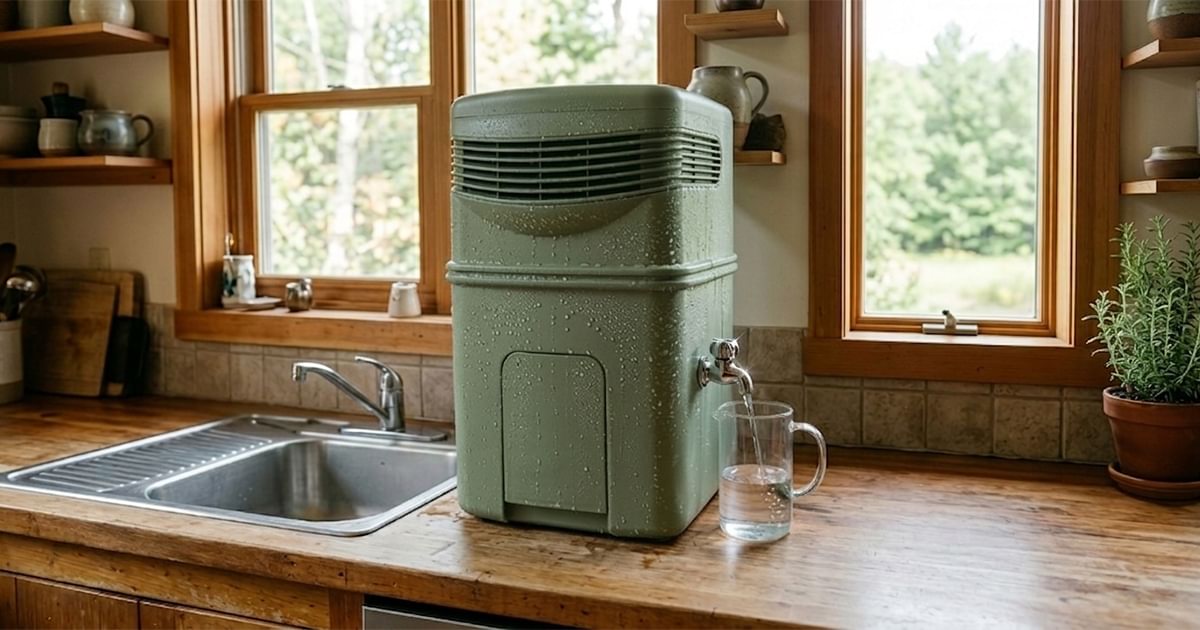
Atmospheric water generators use controlled cooling systems to create this condensation intentionally – drawing in air, cooling it past the dew point, collecting the condensate, and running it through filtration to produce clean drinking water.
This isn’t fringe technology. Militaries have used atmospheric water generators in field operations for decades. MIT researchers have developed a window-sized device that taps air to produce safe drinking water – proof that the science is advancing rapidly at the highest levels.
The World Economic Forum named atmospheric water harvesting one of the top water innovation trends for 2025-2026. And as centralized water infrastructure becomes an increasingly recognized military and cyber target, generating your own water – independently, right where you live – has never made more practical sense.
Meet the Smart Water Box: A DIY Blueprint That Changes Everything
Commercial atmospheric water generators exist – some are excellent. But quality units start at $2,000 and can run to $8,000 or more. In a supply chain disruption, you can’t order one and expect timely delivery.
That’s the gap the Smart Water Box was designed to fill.
It’s not a factory-built machine. It’s a detailed, step-by-step DIY blueprint guide showing you exactly how to build your own atmospheric water generator using affordable, widely available components – the kind you can pick up at most hardware stores for around $110 to $200, depending on your build.
The guide covers everything: condenser coils, fans, filtration stages, food-grade storage, safety checks – all in plain, jargon-free language that doesn’t require an engineering degree. Most people complete a first working build over a single weekend.
Over 11,000 people have already downloaded and built from this guide. Clean water from the air – rain or shine, grid up or grid down, war or peace.
Is Water From Air Actually Safe to Drink?
This is the most common question people ask – and it deserves a direct answer.
When designed properly, atmospheric water systems include filtration stages that make the produced water genuinely safe to consume. Typical purification steps include sediment filtration, activated carbon filtration, and optional UV sterilization. These steps remove contaminants and improve taste.
Interestingly, condensed atmospheric water is often purer at the point of collection than tap water – it hasn’t been sitting in aging municipal pipes or accumulating agricultural runoff. The critical factor is always proper filtration and regular maintenance.
The Smart Water Box guide covers the full filtration setup, maintenance schedule, and recommended testing routine in plain language any homeowner can follow.
Your 5-Step Water Independence Plan
Whether you build an atmospheric water generator or not, every household needs a layered water resilience plan. Here’s a realistic, actionable roadmap.
Step 1: Store Emergency Water
Even if you explore every other option, stored water remains essential. Keep at least one week of drinking water per person. Follow the US government emergency water storage guidelines for proper containers, rotation schedules, and storage conditions.
Step 2: Add a Gravity Filtration Layer
A quality gravity filter – Berkey, Alexapure, or similar – can purify collected rainwater, well water, or questionable tap water without electricity. This is your manual backup that works when nothing else does.
Step 3: Know Basic Water Purification Methods
Boiling, chemical purification tablets, and UV pens are simple, reliable backup methods for treating water from emergency sources. Learn them before you need them.
Step 4: Identify Alternative Sources Near You
Nearby rivers, lakes, collected rainwater, and atmospheric moisture can all serve as emergency sources when paired with proper filtration. Know what’s available in your area before a crisis forces you to find out under pressure.
Step 5: Consider Decentralized Water Generation
This is where atmospheric water generators – and DIY solutions like the Smart Water Box – enter the picture. They offer something no other system does: genuine independence from local water infrastructure, operating continuously as long as there’s humidity in the air and a power source running.
»» Learn How To Pull Drinking Water Straight From Air ««
Who Should Seriously Consider Building This?
Homeowners
Want a reliable backup when the municipal supply goes down
Off-Gridders
Seeking true water independence without digging a well
Preppers & Survivalists
Building redundancy into every critical system – water first, always
Campers & Travelers
Portable builds mean clean water in remote locations without hauling tanks
Families
Concerned about water quality and access during a local crisis
Drought-Zone Residents
In regions where water restrictions are already a fact of life – and getting worse
An atmospheric water generator isn’t ideal for every situation. In very arid desert climates where relative humidity regularly drops below 30% – the Mojave, parts of the Southwest – production slows significantly. Without any power source, the system won’t run. For very large families, combining this with rainwater catchment is recommended. The Smart Water Box guide is refreshingly honest about these limits – which is exactly why thousands of people trust it.
Who Is Smart Water Box For? – At a Glance
Not everyone needs to build an atmospheric water generator (AWG). But certain groups will find it especially valuable:
homeowners who want a backup water supply when municipal systems fail, preparedness-minded families building multiple redundancy layers, off-grid enthusiasts living independently from city infrastructure, people in drought-prone areas with unreliable rainfall, and anyone who watched the events in the Gulf in March 2026 and thought – I need a plan.
In many parts of the world – including large areas of North America, Europe, and Asia – the atmosphere contains enough moisture for meaningful small-scale water production. Humidity levels and climate conditions do affect output, and the guide is honest about where the system works best and where its limits lie.
Of course, if you already have a water source but need to make it safe to drink, a portable reverse osmosis system adds another essential layer of preparedness:

Water Independence FAQ: Your Questions Answered
Common questions about atmospheric water generators, producing drinking water from air, and building an off-grid home water supply.
11,000+ families enrolled
Opt out of the water grid – starting this weekend
Get the step-by-step DIY blueprints to build your own atmospheric water generator at home. No engineering background needed.
Instant digital download · Build for ~$200 in hardware
Water Crisis Is Already Here – The Only Question Is Your Plan
For decades, most people assumed that clean water would always flow from the tap. Recent events have shattered that assumption.
Wars can damage critical infrastructure. Climate pressure can reduce supply. Cyber threats can disrupt utilities. Aging systems can fail without warning.
None of this means a global water collapse is inevitable. But it does mean one thing clearly: preparedness is no longer extreme. It’s practical.
On particularly bad nights, a UAE resident named Sofia described to CNN lying awake worrying whether the taps might run dry. “We are, at the end of the day, in a desert,” she said. “Water is the basis of our survival.” She never thought she could be in danger of losing access to drinking water. Now she thinks about it constantly.
Sofia lives in the Gulf. But the fragility she’s describing isn’t unique to her region anymore.
A simple emergency water supply, basic filtration knowledge, and a backup generation system can make an enormous difference during unexpected disruptions. The people who plan ahead won’t panic when the headlines get closer to home.
They’ll already have a solution.
Sources & References
1. Associated Press: “Oil built the Persian Gulf. Desalinated water keeps it alive. War could threaten both.” March 8, 2026 — apnews.com/article/iran-war-desalination-water-oil-middle-east-12b23f2fa26ed5c4a10f80c4077e61ce
2. CNN: “Water is even more vital than oil and gas in the Middle East.” March 11, 2026 — www.cnn.com/2026/03/11/climate/gulf-iran-war-water-desalination
3. Foreign Policy: “Targeting Iran’s Fragile Water Infrastructure Puts the Whole Region in Danger.” March 9, 2026 — foreignpolicy.com/2026/03/09/iran-water-drought-desalination/
4. Northeastern University: “The Iran War Puts Mideast Water Supplies at Risk for Millions.” March 2026 — news.northeastern.edu/2026/03/11/iran-war-water-crisis/
5. UN Water: Water Scarcity Facts — unwater.org/water-facts/water-scarcity
6. American Society of Civil Engineers: Infrastructure Report Card — infrastructurereportcard.org
7. International Water Management Institute: “Cybersecurity Risks Are Rising for Water Utilities.” — iwmi.org/news/cybersecurity-risks-are-rising-for-water-utilities-heres-why/
8. World Economic Forum: “Dangerous Blindspot in Infrastructure Cybersecurity.” October 2025 — weforum.org/stories/2025/10/dangerous-blindspot-in-infrastructure-cybersecurity/
9. US Government / FEMA: Emergency Water Storage Guidelines — ready.gov/water
10. MIT News: “Window-Sized Device Taps Air for Safe Drinking Water.” June 2025 — news.mit.edu/2025/window-sized-device-taps-air-safe-drinking-water-0611